
If you haven’t noticed, we’re a little too obsessed with shoes, primarily sneakers. But, have you ever wondered why people spend hundreds of dollars on limited-edition sneakers? Or why do they spend hours picking out the right footwear to match their outfits? What’s so special about shoes? Aren’t they a piece of attire that is made for walking? Well, it’s more than just that. This article will dive into the psychology of shoes and see what they have to say about personalities, consumer behavior, and emotional states!
 Can You Tell Someone’s Personality by Their Shoes?
If you want an instantaneous answer, yes. Shoes can tell a lot about people’s personalities. In fact, people underestimate how much others judge them based on the choice of footwear they make. This is all based on actual research.
An experiment done for the scientific article “Shoes as a Source of first impressions”, provided 63 participants with 200 images of people wearing different kinds of shoes. Participants had to guess shoe owners’ psychological profiles based on their daily shoes alone. Guess what happened? Participants provided accurate assessments of the shoe owners in terms of age, gender, income, and attachment anxiety!
But that can’t be true, can it? Walk with me.
Researchers claimed that the participants accurately assessed the psychological profiles of shoe owners based on the comfort and attractiveness of shoes. For example, images of dress shoes gave away that the shoe owner is a professional, while images of knit sneakers gave the impression of teens or early twenties individuals.
But it’s more than that. If the shoe owner’s daily preference was heels, this gave away that they care more about social status and looks, sacrificing conformity. The psychology of shoes deducts that it’s not “form follows function”, it’s the other way around.
This is why you see some women walking around with comfortable sneakers until they arrive at an event, then, they’ll pull out their heels from their satchels and walk around confidently, no matter how painful it is!
But, what about attachment types? This is based on people who nitpick their shoes, giving all the extra detail and care to their footwear. This might mean that the shoe owner is anxious and crave attention, thus, attachment anxiety. On the other hand, people with avoidant attachments that don’t care about how they’re perceived might put an indiscriminate shoe selection.
What Do Popular Brands Shoes Say About You?
Nike Flyknit

Easygoing. The Nike Flyknit line is mostly attractive to people who live an active lifestyle. However, they are also worn by people who like low-maintenance sneakers with easy wearability. This is also true for the Adidas Ultraboost.
Yeezy Foam Runner
This has to be for all the imaginative people out there. The Yeezy Foam Runner is a bit too, futuristic. These will definitely grab the eyes of people who like to think outside the box! Moreover, Yeezy foam runners are among the biggest silhouettes in the sneaker industry. As in the sneaker reselling industry. They are one of the biggest cocreations of Adidas and Kanye. Even after their dramatic split, Foam runners are among the most expensive Yeezys you can get a hold of now.
Air Force 1s
 You can consider AF1s as a cultural icon. They have become a very popular choice of shoes among teenagers today. People who flaunt these classics are considered to be friendly and cultured. On another spectrum, AF1s are the perfect beaters for individuals who just like the worn-out and laid-back look.
Converse
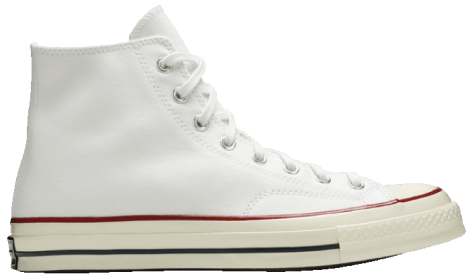 People who wear Converse are usually the “not like the other girls” type of individuals. Many rockstars and creatives pull off Chuck Taylors, which can give you a clue of who might be wearing them. Also, Converse lovers are typically not sneakerheads, as they will always favor a Converse-like silhouette.
Don’t consider these Bible statements, as not everyone who wears Yeezy Foam Runners might be imaginative, and not all who wear Chuck Taylors are not sneakerheads. This is just a general outlook.
The Psychology of Shoe Shopping
On another note, the psychology of shoes could be studied in how we buy shoes in the first place. Shoe shopping is considered to be hedonic. Hedonic shopping means shopping for pleasure instead of necessity.
Continuing the above concept, shoe shopping is pleasurable because we see shoes as an extension of our personality. It’s easy to find clothes that fit your style, but hunting down the perfect pair of sneakers that is both fashionable and comfortable is a euphoric experience!
However, the psychology of shoe shopping doesn’t stop here. In a recent study, researchers studied customers buying behavior and preference toward popular shoe brands. The study focused on 4 multinational brands, Nike, Puma, Adidas, and Reebok. The study found that quality, comfortableness, price, and innovation played a role in the purchase aspects.
You can see the results of the study below.
 This concluded that people are more inclined to purchase Reebok for the price and comfort, Nike for advertisement and design, Adidas for quality and advertisement, and Puma for advertisement. Here we can see the psychological effect shoe marketing has on individuals. Sometimes, advertising a pair of shoes in the right way can grab people’s attention, even if the shoe itself is uncomfortable.
This means that customer buying behavior is influenced by commercial firms, advertisements, the marketing strategy of the company, and much more other criteria. The study also showcased that customers would buy shoes based on the color, style, design, endorsement of brand celebrities, and attractive features of the online market. In some cases, customers prefer buying customized shoes.
Do Shoes Make Us Happy?
Okay, so we’ve seen how shoes can tell a lot about people’s personalities. We’ve also seen how the psychology of shoe shopping is led by major brands through different strategies. But, what about the emotional state? Can shoes make us happy? Well, absolutely!
For starters, shoes can hold emotional significance for many people, especially sneakerheads. You most probably have a favorite pair of shoes, and even though they might be worn out, you just can’t throw them out for their sentimental value. They can be associated with happy or sad core memories that you just don’t want to lose.
On the other hand, buying a new pair of shoes can be therapeutic, and thus bring joy to your day, especially during stressful times.
Shoes can be the best piece of attire to communicate an emotional state. For example, people may feel confident wearing a suit with polished dress shoes. However, switch the dress shoe with colorful sneakers under the suit, they will be chiller and more laid back.
Wearing heels doesn’t give you the same feeling as wearing flats. The latter can make you lighter and more free, while the former can give you a confidence boost. This may seem obvious, but sometimes we underestimate the power shoes have over our overall mood.
We don’t have to wait for psychology studies to tell us, shoes do make us happy. Remember, they are the vehicle we use to roam around and the image we want to project about ourselves. See how you can get your favorite sneakers on release day!